You Can Do Hard Things – Vector Design Insights
Every creative project starts with a message that resonates. The You Can Do Hard Things design has become a quiet powerhouse in the world of print-on-demand, apparel decor, and personal branding. It speaks to resilience without shouting. It encourages without sounding hollow. When you work with a You Can Do Hard Things vector file, you are not just handling a piece of art. You are holding a versatile tool that can adapt to almost any medium, audience, or occasion.
Whether you are a print-on-demand seller looking for your next bestseller, a designer building a cohesive collection, or a small business owner wanting to offer meaningful products, this design gives you a foundation that is both emotionally grounded and commercially flexible. Let's explore what makes this vector special, how you can use it across formats, and what you need to know to get the best results every time.
What Makes This Vector Design Stand Out
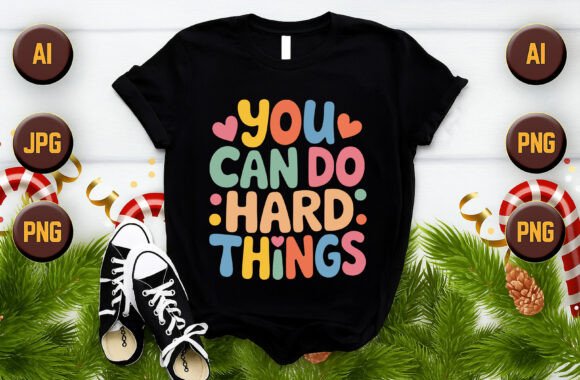
The You Can Do Hard Things vector is not just typography set in a bold layout. It is a statement that works because it connects with people who are navigating challenges, pursuing growth, or simply need a daily reminder of their own strength. The design is clean, modern, and highly readable, which means it performs well at different sizes and on different surfaces.
From a technical standpoint, the file package includes everything you need: a print-ready PNG at 4500×5400 pixels and 300 dpi with a transparent background, plus editable EPS, JPG, AI, and PDF formats. The files come compressed in a single ZIP archive. Once extracted with WinZIP, WinRAR, or any standard extraction tool, you have immediate access to a vector that can be scaled infinitely without losing quality. That matters when you are printing on a small mug or a large poster.
The transparency of the PNG file also means you can layer the design over any color background, pattern, or texture without extra cleanup work. For designers and sellers, that saves hours of editing and ensures consistency across your product line.
Creative Possibilities Across Products
One of the greatest strengths of this design is its adaptability. The same vector that looks bold on a t-shirt can feel understated on a notebook or striking on a wall print. Here are some practical ways to apply it across different products.
Apparel and Clothing
T-shirts, hoodies, sweatshirts, and tank tops are the most obvious starting points. The typography works well centered on the chest, but you can also experiment with a smaller placement near the collar or a larger layout across the back. For a sweater or jumper, consider a tonal print in a muted color such as charcoal on heather grey or cream on oatmeal. The message becomes part of the garment rather than competing with it.
For a hoodie, a distressed or vintage-style version of the vector adds a worn-in feel that suits casual streetwear. If you are targeting a younger audience, try bright accent colors like coral or neon yellow against a black background. If your audience is more professional or minimalist, stick with monochrome or earthy palettes.
Mugs, Pillows, and Home Goods
Home and lifestyle products are a growing segment for print-on-demand sellers. A mug with the You Can Do Hard Things design works as a morning motivator or a gift for someone going through a tough season. Because the vector is high-resolution, the text remains crisp even on curved surfaces.
Pillows and throw blankets offer a chance to use the design in a more decorative way. You can frame the text inside a border, pair it with simple geometric shapes, or use a split layout where the words wrap around the edges. The key is to keep the composition balanced so the message remains the focal point.
Stationery and Low-Content Publishing
For educators, journal creators, and KDP publishers, this vector fits naturally into lined journals, planners, and notebooks. You can use it as a cover design with minimal additional elements, or place it on the inside as an inspirational page. The EPS and AI files make it easy to resize and reposition the text so it works with different trim sizes.
The design also works well for posters and wall art. Because the vector is clean and the message is universal, it appeals to people decorating home offices, gyms, or meditation spaces. A simple black-and-white print on high-quality paper keeps the focus on the words.
Adapting the Design for Different Audiences
Not every customer connects with the same visual style. The beauty of having a vector file is that you can modify colors, add textures, or combine the typography with other graphic elements without starting from scratch.
For a younger, trend-driven audience aged 20 to 30, try pairing the design with abstract brush strokes, halftone patterns, or gradient fills. The message remains the same, but the presentation feels current and energetic. For an audience aged 30 to 50, especially entrepreneurs, freelancers, or parents, a cleaner layout with serif or sans-serif pairing often feels more appropriate. Adding a subtle tagline like “keep going” or “one step at a time” beneath the main text can deepen the connection.
If you are selling on platforms like Etsy, Amazon Merch, or Redbubble, consider creating variations for different niches. A fitness version with the text inside a circular badge, a mental health version with soft pastel tones, or a graduation version with a cap icon. Each variation targets a specific moment in your customer’s life while keeping the core message intact.
Practical Tips for Working with the Files
Getting the most out of this vector package requires a little preparation. Here are some recommendations based on real-world use.
- Always work from the vector files (EPS or AI) when resizing. Raster files like PNG and JPG lose quality if scaled up significantly. Vector files stay sharp no matter how large you go.
- Use the transparent PNG for quick mockups. If you want to test how the design looks on a product before committing to a full edit, drop the PNG into a mockup template. It saves time and helps you iterate faster.
- Mind the resolution for print. The PNG is already at 300 dpi at a large canvas size, which is perfect for most print applications. But if you plan to print on fabric with a coarse texture, you may want to increase the stroke weight slightly to maintain readability.
- Extract the ZIP file properly. Use WinZIP, WinRAR, or the built-in extraction tool on your operating system. Do not try to open the files directly from the compressed folder, as this can cause errors with vector formats.
- Keep a master file with your edits. Once you customize the design for a specific product, save a copy in a dedicated project folder. This makes it easier to revisit or refine later without losing your original work.
How to Keep Your Designs Clear and Effective
A message like “You Can Do Hard Things” works best when it is easy to read at a glance. That means your layout choices matter. Avoid placing the text over busy patterns or images that compete with the words. If you want to add background elements, keep them low in contrast or use a solid color block behind the typography.
Consistency across your product line also builds trust with your audience. If you sell a t-shirt with the design in white on a dark background, consider offering the mug and notebook in the same color scheme. Customers who buy one item are more likely to return for matching products if they feel a cohesive brand identity.
For print-on-demand sellers, testing small batches before scaling up is always smart. The vector gives you the flexibility to try different sizes, placements, and color combinations without a large upfront investment. Use that flexibility to learn what resonates with your specific audience.
Final Thoughts on Using This Vector
The You Can Do Hard Things vector is more than a file you print. It is a creative starting point that can grow with your projects, your audience, and your skills as a designer or entrepreneur. Whether you are producing a single custom shirt for a friend or building a full catalog of print-on-demand products, the design offers clarity, emotional depth, and commercial versatility.
Keep your applications purposeful. Let the message do the heavy lifting. And remember that the best designs are the ones people feel connected to, not just the ones they see. With the right vector file in hand, you already have everything you need to create something that matters.